Tuesday, December 27, 2011

Boon: Framboise (fruit lambic) – Fruity Senne Valley funkiness


Lembeek is a small Belgian town that sits about 10 kilometers southwest of Brussels on the border between the country’s Flemish and Walloon regions. In what by now must seem like a small Brussels suburb, Lembeek lies squarely within the heart of Senne Valley, where the wild yeasts from the Senne River, along with wild yeasts lurking within the brewery, spontaneously feed on the sugar-rich worts of some of the region’s finest breweries – a process that gives rise to those sour, cidery, and super dry lambic beers that people love, hate, or have yet to try. Lembeek is also home to Boon Brouwerij, which brews a variety of largely spontaneously fermented beer. Matured in oak barrels, Boon’s Framboise (French for raspberry) is an amazing raspberry blend of old and young lambics. If you are in the “never tried” category, I suggest reading a bit about lambics by checking out the links below and then finding a friend that is brave enough to split one with you. And Boon’s Framboise, with its fruity and funky balance, is a good one to begin with.

My particular sample was a vintage 2010, although I’ve had one or two a few years back before I was serious enough to document my beer samples. The body appears as a bright red color with a small, fluffy, light pink head. The lacing is a bit thin and runny, which seems to be the case with most lambics I’ve tried. The aroma is far less “wild” than what one might anticipate from a lambic. To be sure, scents of barnyard are present, but the raspberry aroma is surprisingly powerful, although not overpowering. Strong vinegar and earthy aromas also come forward, which really adds to the beer’s roughness. The taste is certainly sour, but the raspberries add a level of sweetness to it that really makes Boon’s Framboise a remarkably well-balanced brew. Not surprisingly, the mouthfeel comes with lots of carbonation, and the finish is quite dry.

If you’ve had just about any other fruit lambic, say Kriek for example, then I’m sure you’ll find Framboise to be a rather sweet concoction. That said, the overall balance is still on the sour side – enough to tell the drinker that, indeed, one is downing some of the Senne Valley’s finest funkiness.

Links


Brouwerij F. Boon: http://www.boon.be/


Image credits


Monday, December 26, 2011

Ægir: Natt Imperial Porter – A testimony to excellence and elegance


Ægir’s brewery is nestled in the tiny and majestic fjord town of Flåm, Norway, and the brewery’s arrival to the scene there really completed Flåm as an attractive tourist destination. Ægir’s brews are noteworthy for their subtleness; indeed, it often takes a very perceptive palate to identify all the particularities in Ægir’s flavor complexes, as compared to Nøgne Ø’s more “in your face” approach, or so it seems. Both qualities are good, but this difference is why I sometimes prefer Nøgne Ø’s brews: You don’t have to work as hard to draw out and identify the different tastes. 

I’ve managed to sample Natt Imperial Port on three separate occasions, and this brew just seems to taste better and better over time. Like other Ægir products, Natt’s characteristics are subtle and delicate; they threaten to escape the attention of a causal drinker. In my view, this is one of the best Ægir products and is probably in my list of top five beers I’ve tasted in 2011. Life in the glass starts with a dark brown – almost black – color with a small but well retained tan head. The lacing is tight and sticky, although the most recent sample I’ve had was a bit weak in the lacing. 

Generally speaking, Natt Imperial Porter’s aroma is not amazingly powerful, but is instead loaded with subtle complexities, including faint hints of licorice, chocolate, berries, sweet malt, and more. But coffee seems to be a dominant aroma. The creamy mouthfeel and generous carbonation are accompanied by a variety of flavors, notably coffee, toffee, caramel, and licorice. There’s a wonderfully bitter climax right before the finish, leading to nutty and licorice flavors that seem to linger on for a few minutes while competing for the palate’s attention. What’s surprising about this is how easy it is to drink, largely due to the virtual absence of any alcohol taste, despite its 10 percent ABV. Natt Imperial Porter does lose some of its balance as the temperature exceeds 12 Celsius (54 f) and the alcohol flavor comes alive.

Overall, Natt Imperial Porter is a testimony to Ægir’s crafting excellence and elegance. While its price is awfully high, I strongly recommend sampling this. But do so with the expectation of having to work a bit to sort out the aromas and tastes. 

Links


Image credits


Nøgne Ø: Underlig Jul – Mild, spicy, Christmassy


There’s just something so cozy about drinking dark Norwegian beer at 60 degrees north in Norway during the holiday season, amid falling snow and Santa. Well, for those familiar with this part of the world, you’ll surely know that the latter two are really the stuff for postcards rather than winter’s windy and wet reality. But Nøgne’s Underlig Jul really warms things up, and it may make the holidays more enjoyable (or at least bearable for those holiday skeptics).

While the name, which means curious or strange Christmas, suggests something highly unique, I found nothing truly original in Nøgne’s Ungerlig Jul. It’s malty, spicy, and well balanced in ways not much different than many other Christmas beers out there. Like other Christmas beers, Underlig Jul is a real treat. Life outside the snowflake speckled bottle begins with a dark reddish-brown color and a robust, foamy beige head. The lacing is a bit runny, but dense nonetheless. Giving it a whiff reveals roasted malts, licorice, and some Christmassy spices like ginger and cinnamon in the background. Overall, the taste closely resembles the aroma. Underlig Jul finishes dry and relatively bitter, and the spices leave a faint tingling sensation. 

This is a pretty solid Christmas brew, although not as complex as Nøgne’s God Jul. The label on the bottle suggests trying it with “traditional Christmas cookies” and that is certainly the right thing to do, especially with ginger snaps.

Links

 
Nøgne Ø, Underlig Jul: http://www.nogne-o.com/seasonal-beers/underlig-jul.html

Image credits

Suregork Loves Beer: http://beer.suregork.com
  

Sunday, December 25, 2011

Ægir: God Jul (7 percent ABV) – Subtle and delicate


Ægir’s brewery is nestled in the tiny and majestic fjord town of Flåm, Norway, and the brewery’s arrival to the scene there really completed Flåm as an attractive tourist destination. Ægir’s brews are noteworthy for their subtleness; indeed, it often takes a very perceptive palate to identify all the particularities in Ægir’s flavor complexes, as compared to Nøgne Ø’s more “in your face” approach, or so it seems. Both qualities are good, but this difference is why I sometimes prefer Nøgne Ø’s brews: You don’t have to work as hard to draw out and identify the different tastes. 

So, on Christmas Eve, my wife and I decided to take some time to enjoy an Ægir God Jul 7 percent ABV version, and what a treat this one is. Life in the glass begins with a dark amber pour, culminating in a tall and well-retained off-white head. Rolling it around in the glass produces a matrix of sticky laces. In terms of appearance, Ægir’s God Jul is a very attractive brew. 

Taking a whiff reveals a very subtle and Christmassy aroma with an ample amount of complexity: think orange peel, bubblegum, and a hint of spice. The alcohol presence becomes more distinct as the beer warms. The mouthfeel is oily, with medium carbonation. On the palate, the flavors are again very subtle and one has to work a bit to separate them. Bubblegum and orange peel are definitely front and center, followed by some sort of Christmassy spice. The finish is dry, slightly bitter with just a touch of warmth from the alcohol. As the beer’s temperature rises a bit, the orange peel seems to transition into more of a banana flavor, as identified by a number of others on Ratebeer. However, the increased temperature also throws off the balance, making the finish a bit too bitter and boozy to adequately compliment the other flavors. So, be sure to drink this thing at around 8 to 10 Celsius (46-50 f). 

Overall, Ægir’s God Jul rivals any of the Christmas beer’s I’ve sampled this year. It’s highly complex, but in a subtle and delicate manner. In contrast to some of the other Christmas beers I’ve had, the spicy background in God Jul’s aroma and taste really gives it a holiday feel without undermining some of the other flavors. At the right temperature, it is an incredibly well-balanced brew and I’m happy to have a few of these in the cellar.

Links


Saturday, December 24, 2011

Haandbryggeriet: Nissemor – Tasty, but flawed

Scandinavia is home to the origins of Christmas beer, and thankfully, the Vikings that settled in England took that tradition with them. While the origins of “juleøl” are not specifically tied to Christmas, today we associate Christmas beer with darker lagers and stouts, along with the smells and tastes of ginger and cinnamon, to name a few. And there’s just something so cozy about drinking strong, dark Scandinavian beers while in Scandinavia during the holiday season. 

Hailing from Drammen, Norway, about a half-hour drive south of Oslo, Haandbryggeriet brews a very creative line of products, although not all of them have been big hits with me personally. Nissemor (literally mother Santa) indeed captures some of the essence of juleøl and the holiday spirit generally. It also captures some of Haandbryggeriet’s creative side as well some of the flaws that sometime come with experimentation. For starters, it was nearly impossible to pour Nissemor without an explosion of foam breaching the rim of the glass. Needless to say, the beige and brown-edged head almost exceeded the boundaries of the “finger” measuring system – certainly a sight to see. It took about five minutes of settling before it was fit to drink. The color is very dark brown. The lacing is as sticky, just as it should be, especially considering the amount of head this thing produces.

The aroma is largely roasted malts accompanied by some yeast references and some Christmassy spices. However, roasted malts seem to be the predominant aroma to the point where some of the underlying nuances of the brew (like the dark fruit additives) are largely masked. As far as the taste is concerned, I found Nissemor to be particularly unbalanced even after it warms up. Again, roasted malts seem to dominate to a fault. It took forever to find any hints of the dark fruit additives to the point where I began to wonder if my brain was just filling in some of the flavors that should have been there. At the same time, some of the dry ginger spiciness comes through in the finish, which really helped to balance out the Nissemor to some extent. The mouth feel is thick with medium carbonation and a distinctively dry finish that really complements the ginger aftertaste. 

Overall, Nissemor is a very unbalanced and overly active brew. That said, I did thoroughly enjoy drinking it largely because I love the taste of roasted malts and ginger. The finish was particular enjoyable. Unfortunately, it is difficult for me to recommend this, given the price and the lack of balance. 

Links

Haandbryggeriet, Nissemor: http://haandbryggeriet.net/Nissemor.html

Image credits


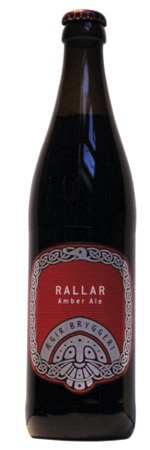
Ægir: Rallar (Amber Ale) – Caramel, apples, dark chocolate and more


“Rallar” is a Norwegian word that was used to describe migrant industrial workers during the 1800s and early 1900s, most notably those that worked on building the railroad line that stretches from Oslo in eastern Norway across the plateaus to reach Bergen on the west coast. The construction road used for building the railroad is called “Rallarvegen”, which today is a well-travelled hiking route. One of the endpoints of “Rallarvegen” is in the majestic fjord town of Flåm, the home to Ægir’s brewery.

The term “Rallar, however, is a sort of curious choice for this fine ale. After all, the price of this beer is far from working class.  But for me, it’s one of the best amber ale’s I’ve had in recent years, and it’s truly a treat for me and anyone who happens to drop in for a visit, although serving too many of these to guests (and to myself) can get expensive. But it’s worth it. 

Life in the glass begins with a medium-brown pour, culminating in a tall and well-retained fluffy off-white head. The lacing is tight and sticky. Taking a whiff reveals a very powerful aroma with an ample amount of complexity given its timid 4.7 percent ABV: think caramel, apples, dark chocolate, and a hint of spice. The mouthfeel is slightly watery and, for the first second or so, there does not seem to be much taste to it aside from a bit of apples perhaps. But, after two to three seconds on the palate, there is a burst of chocolate and caramel that recedes into a nutty and slightly bitter finish. In short, swallowing it too quickly will leave very little in the way of taste. But, letting sit on the palate for a bit really turns this ale into a wonderful treat. Overall, it’s well balanced and a great session beer.

Links


Ægir Brewery: http://www.flamsbrygga.no/en 

Image credits

Cardinal Pub: http://www.cardinal.no/ 

Thursday, December 22, 2011

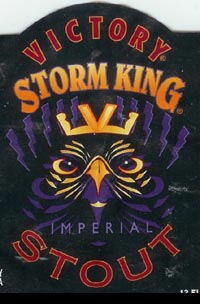
Victory: Storm King (Imperial Stout) – Espresso never tasted so good


Located in Downingtown, Pennsylvania – about a 30 minute’s drive to the west of Philadelphia, Victory Brewing Company has about a dozen regular beers, another ten or so seasonal beers, and an excellent brewpub that I look forward to revisiting the next time I’m in the area. Storm King was my first encounter with Victory products – introduced to me at a local New Years Eve party a few years back. Since then, I’ve tried to sample everything they put out. To this day, I have yet to come across a Victory product that is anything less than superb. But, for me at least, Storm King is their flagship brew.

Life outside the bottle begins with a night black color, culminating in a medium-sized and resilient dark tan head. The lacing is tight and sticky, clinging to the sides of the glass long after the beer is consumed. The nose is roasted malts:  caramel, espresso galore, chocolate, and not a hint of alcohol, which is impressive considering its 9.1 percent ABV. A hop note is clearly present, but it’s definitely subdued by the malt. 

While the mouth feel is a bit less creamy than I might have hoped, the taste is brilliant: roasted malts, caramel, dark chocolate, and more. Storm King seems to be hopped more aggressively than other comparable stouts, but the hop bitterness does well in supporting the malt flavors. The espresso flavor rushes in about half-way to the finish and lingers on for a minute or so afterwards. But espresso never tasted so good! Again, not a hint of alcohol can be found, which certainly satisfies my tastes, but probably weakens its loyalty to imperial stouts as a genre.

Links

Related Posts Plugin for WordPress, Blogger...